Archiv des Monats: Februar 2006

Roggenbrot von Michael Yoss

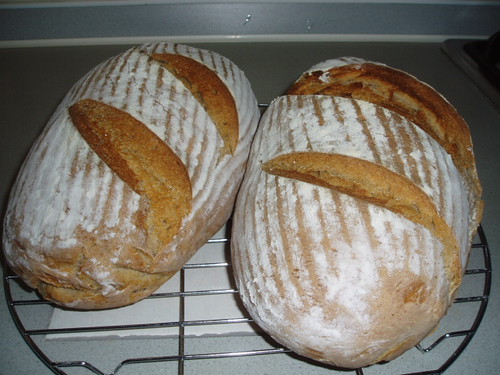
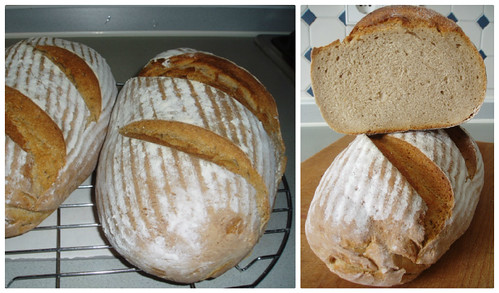
Dieses Brot gehört ohne Zweifel zu unseren Favoriten. Eigentlich wird es nach dem Backen mit einer Stärkelösung eingestrichen, die einen besonderen Glanz erzeugt. Es schmeckt aber auch ohne Glanz sehr lecker.

Bei dem Rezept Roggenbrot von Michael Yoss handelt es sich um ein typisches Brot mit Roggen, wie es in den Delikatessen-Läden Amerikas für Sandwiches verwendet wird. Michael Yoss betreibt eine Bäckerei in Atlanta. 25.09.2024 **

Roggenbrot von Michael Yoss/>

Zum englischen Originalrezept geht es hier:

Roggenbrot von Michael Yoss

Menge:2 Brote à 900 g

Roggenbrot von Michael Yoss

Rezept für Roggenbrot von Michael Yoss, wie es in den amerikanischen Delikatessen-Läden für Sandwiches benutzt wird.

Zutaten:

1. STUFE ROGGENSAUERTEIG

  • 15 Gramm Roggensauerteig, 100 % Hydration
  • 15 Gramm Roggensauerteig, 100 % Hydration
  • 12 Std vorher aufgefrischt und voll fermentiert
  • 2 Essl. Wasser
  • 45 Gramm Roggenmehl Type 997

2. STUFE ROGGENSAUERTEIG

  • Gesamtmenge 1. Stufe Roggensauerteig
  • 195 Gramm Wasser
  • 280 Gramm Roggenmehl 997

BROTTEIG

  • 540 Gramm Wasser, lauwarm
  • Gesamtmenge 2. Stufe Roggensauerteig
  • 850 Gramm Weizenmehl 812, Original: clear flour
    oder
  • 724 Gramm Weizenmehl 1050 plus
  • 126 Gramm Weizenmehl 550
  • 150 Gramm Roggenmehl 997
  • 2 Pack. Trockenhefe, 15 g; Ulrike: 1 Päckchen Trockenhefe reicht definitiv auch
  • 27 Gramm Salz
  • 17 Gramm Kümmel, optional
  • Maisgrieß oder Reismehl

STÄRKEGLASUR

  • 1 Essl. Mais oder Kartoffelstärke
  • 300 ml Wasser

QUELLE

Roggenbrot von Michael Yoss *

abgewandelt von nach:
Roggenbrot von Michael Yoss
Maggie Glezer via e-mail am 15.07.2004
vor erscheinen von:
A Blessing of Bread: The Many Rich Traditions
of Jewish Bread Baking Around the World
*

ZUBEREITUNG

  • Am Tag vor dem Backtag für Roggenbrot von Michael Yoss: Mischen und fermentieren der 1. Sauerteigstufe:
    Den Roggensauerteigs in einer kleinen Schüssel mit dem Wasser auflösen und das Roggenmehl einrühren. Das ganze ca. 8 – 10 Stunden fermentieren lassen oder bis der Starter voll aufgegangen ist und fast schon wieder zusammenfällt.
    Am späten Abend die Gesamtmenge der 1. Sauerteigstufe in einer größeren Schüssel im Wasser auflösen und das Roggenmehl hineinmischen. Den Sauerteig für 8 – 10 Stunden fermentieren lassen oder bis der Starter voll aufgegangen ist und fast schon wieder zusammenfällt.
  • Backtag: Teig mischen und Teigruhe:
    Die Wassermenge zu dem Sauerteig in die Schüssel geben und mischen, bis sich der Sauerteig darin löst. In der Schüssel der Köchenmaschine die Mehlmischung, Hefe und Salz mischen. Den gelösten Sauerteig auf niedriger Stufe mit dem Knethaken einrühren und ca. 7 Minuten weiterkneten, bis der Teig weich und glatt ist. Bei Bedarf die Kümmelsaat zufügen und weiterkneten bis sie sich gleichmäßig verteilt haben. Die Schüssel mit Folie abdecken und 10 – 20 Minuten bzw. so lange ruhen lassen, bis der Teig anfängt hoch zu gehen. Der Teig soll sich glatt sein, fühlt sich aber noch ein wenig klebrig an.
  • Ofen vorheizen, Teig formen und Teiggärung
    Den Ofen mit einem Backstein bestücken und auf 230 °C vorheizen. Den Brotschieber mit Maisgrieß oder Reismehl dünn einstäuben. Auf einer
    leicht bemehlten Arbeitsplatte den Teig zu einem dicken Rechteck formen. Den Teig in zwei gleich große Teile teilen, eine Hälfte abdecken und zu einer Rolle von 8 cm Ø und ca. 23 cm Länge formen. Die Teigrolle hin- und herrollen, um sie zu glätten. Mit der Naht nach oben in einen Gärkorb legen. Mit der 2. Hälfte genauso verfahren. Die Gärkörbe in eine Plastiktüte stecken und ca. 1 Stunde gehen lassen. Der Teig ist fertig, wenn sich das Volumen etwa verdreifacht hat oder ein Fingerabdruck nicht sofort wieder zurückspringt. Die Brotlaibe auf den Brotschieber stürzen und einschneiden, in den Backofen einschießen und schnell mit Wasser besprühen. Die Brote für ca. 1 Stunde backen. Nach 10 Minuten Backzeit die Ofentemperatur auf 200 °C reduzieren. Nach weiteren 30 Minuten die Brote im Backofen drehen, damit eine gleichmäßige Bräunung erreicht wird und für weitere 20 Minuten backen.
  • Kochen der Stärkeglasur: (Ulrike: optional, lasse ich meist weg)
    Während die Brote backen, die Stärke mit Wasser vermischen und so lange köcheln lassen bis die Glasur klar wird und anfängt einzudicken. Die Glasur sollte angedickt, aber immer noch leicht zu verstreichen sein. Wasser hinzufügen, wenn die Glasur zu dick geraten sein sollte und weiter einkochen, wenn sie zu dünnflüssig sein sollte. Die Brote mit dieser Glasur sofort nach dem Backen bestreichen. Wenn die Glasur eingezogen ist, ein weiteres Mal damit bestreichen. Roggenbrot von Michael Yoss auf einem Gitterrost abkühlen lassen.

Anmerkung: Wenn man tatsächlich Clear flour mit 15,5 % Eiweiß und 0,8 % Asche benutzt, kann man die Brotlaibe auch direkt mit der Naht nach unten auf einem Gärschieber gehen lassen.
Gesamtzeit:18 – 24 Stunden
Vorbereitungszeit:15 Minuten
Koch-/Backzeit: 60 Minuten


*=Affiliate-Link zu Amazon

** 25.09.2024 https://voyageatl.com/interview/meet-michael-yoss-yoss-baking-norcross/ noch im Webarchiv abrufbar

Deli-Style Rye Bread From Michael Yoss

Maggie Glezer sent me this recipe for deli-style rye bread from Michael Yoss, after I showed her pictures of my Whole-Grain Barley Bread With Barley Grits. It’s one of our favoured breads, but I often omit the glaze.

deli-style rye bread from Michael Yoss

Yield:2 Two-pound (900 g) sandwich loaves

deli-style rye bread from Michael Yoss

Recipe for deli-style rye breadfrom Michael Yoss

Ingredients:

FOR THE FIRST BUILD OF THE RYE SOUr

  • 1 tablesp. (15 g, 0.5 oz) firm sourdough starter refreshed 12 hours earlier and fully fermented
  • 2 tablesp. (28 g, 1 oz) water
  • 1/3 cup (45 g, 1.6 oz) white rye flour

FOR THE SECOND BUILD OF THE RYE SOUR

  • All of the first build
  • 1 cup Minus 2 tablespoons (195 g, 6.9 oz) water
  • 2 1/4 cups (280 g, 9.9 oz) white rye flour

FOR THE FINAL DOUGH

  • 2 1/3 cups Plus 1 tablespoon (540 g, 19 oz) warm water
  • All of the second build of the rye sour
  • 6 1/3 cups (850 g, 30 oz) clear flour
  • 1 1/4 cups (150 g, 5.3 oz) white rye flour
  • 1 tablesp. Plus 2 1/4 teaspoons (15 g, 0.5 oz) instant yeast
  • 1 tablesp. Plus 1 1/2 teaspoons (27 g, 1 oz) table salt
  • 2 tablesp. Plus 1 1/2 teaspoons (17 g, 0.6 oz) caraway seeds, optional
  • Fine cornmeal

FOR THE STARCH GLAZE

  • 1 tablesp. (15 ml) corn or potato starch
  • 1 1/4 cups (240 ml + 60 ml) water

SOURCE

 978-1579652104 *

Maggie Glezer via e-mail 15.07.2004 to
before the book was published
A Blessing of Bread: The Many Rich
Traditions of Jewish Bread Baking Around the World
*
ISBN: 978-1579652104

INSTRUCTIONS

  1. THE DAY BEFORE BAKING MIXING AND FERMENTING THE FIRST BUILD

    Late in the morning, dissolve the sourdough starter in the water in a small bowl, then stir in the rye flour. Let this sour ferment for 8-10 hours, or until fully puffed and starting to fall.

  2. MIXING AND FERMENTING THE SECOND BUILD

    Just before going to bed, dissolve all of the first build in the water in a larger bowl, then mix in the
    rye flour. Let the sour ferment for 8-12 hours, or until it has puffed and started to collapse.

  3. BAKING DAY MIXING AND RESTING THE DOUGH

    Add the water to the rye sour in its bowl, and mix it to dissolve it. In the work bowl of a stand mixer, combine the flours, yeast and salt. Pour in the dissolved sour, and mix the dough on low speed with the dough hook until it is soft and smooth, about 7 minutes.
    Add the caraway seeds, if using them, and continue to mix the dough until they are well dispersed. Remove the dough from the stand, cover it with plastic wrap, and let it rest for 10-20 minutes, or just until it begins to rise. The dough should feel fairly and smooth, and be just a little tacky.

  4. PREHEATING THE OVEN, SHAPING THE DOUGH, AND PROOFING THE DOUGH

    Arrange an oven rack on the center rack, place a baking stone on the rack, remove all racks above it, and preheat the oven to 450 degrees F (230 degrees C, gas mark 8). Sprinkle a peel or other thin flat board with fine cornmeal. Lightly flour a work surface, then turn the dough out onto the surface and press it into a thick flat rectangle. Cut the dough into two equal pieces and cover one piece while working with the other. To shape the loaves, fold both sides into center of the dough and press the dough again to even its thickness. Roll the dough up into a log with the folded-in sides at the ends to make a log that is about 3 inches (8 cm) in diameter by 9-inches (23 cm) long. (Basically you want to make a short fat log to have big slices of bread for sandwiches.) Roll the log back and forth to even it, then place it seam-side down on the peel or thin board directly on the cornmeal. Shape the other piece and then cover both well with plastic wrap. Let the loaves proof for about 1 hour.

  5. BAKING THE BREADS

    Have a water sprayer ready. When the dough has tripled and does not push back when gently pressed with your finger but remains indented, slash several deep crosswise cuts into the loaves with a single-sided razor or very sharp knife (FYI: some bakers used 2 cuts to mark a 2 pound loaf and 3 cuts to mark a 3 pound loaf). Slide the loaves onto the hot stone and very quickly spray them heavily with the water. Let the loaves bake for 1 hour. After 10 minutes, lower the heat to 400 degrees F (200 degrees C, gas mark 6). After another 30 minutes of baking, turn the loaves from front to back so that they brown evenly, and continue to bake the breads for another 20 minutes, or until they are golden brown and have a hollow sound when thumped on their bottoms.

  6. COOKING THE STARCH GLAZE

    As the loaf is baking, mix the starch with the water and simmer the mixture, whisking constantly, until the glaze is clear and viscous. The glaze should be thick but easily spreadable. Add water to thin it or let it cook down if it is too thin. When the consistency is right, let it cool. When the loaves are just removed from the oven, brush them with the glaze. As soon as that layer of glaze is dry to the touch, brush them again for a high shine. Let the loaves cool on a rack.

Note:

Skill level: Expert Yields 2 two-pound (900 g) sandwich loaves time required: 20 hours before baking day, then just 3 hours on baking day Recipe synopsis: Have ready an active sourdough. The day before baking, mix the first sour in the late morning, and the second build in the evening before going to bed. The next morning, mix the dough. Let the dough rest briefly, then shape it and let it proof for about an hour. Let the breads bake for one hour.

For corned beef, tuna salad, cheese sandwiches, or any other deli sandwiches, this is the classic rye bread you want. Light in texture, with a thin, chewy, shiny crust, this bread has a caraway bite underscored by a light sourdough rye tang. You will need a strongly fermenting sourdough starter ready to start the first build of the rye sour.

Unlike most wheat-based sourdough breads, rye sourdoughs usually are only flavored with the sourdough and leavened with yeast. Sourdough ryes quickly become extremely sour and gummy, which the addition of yeast prevents. Also note that the dough has almost no fermentation time, only a brief rest before it is shaped (again because rye sourdoughs get unmanageably gooey so quickly), making it a fast project on baking day. You needn’t worry about flavor development; a good rye sour provides plenty.

You can make this bread with white or medium rye flour. The classic deli loaf uses white rye for its lighter color and texture, but if you prefer a heartier rye flavor and darker color, use medium rye flour. White rye is milled from the center of the rye endosperm, while medium rye flour includes the entire rye endosperm but none of the bran or germ.

The clear flour in the recipe is very hard to come by, and must be bought from a bakery or mail ordered (see Sources). Milled from the outer portions of the wheat’s endosperm including the mineral-rich aleurone layer just beneath the bran, it is a much darker-colored flour than a typical bread flour without actually being a wholewheat flour. At 15% protein and with an ash content of 0.8%, it adds a lot of gluten strength, color and flavor to the dough and is critical to the deli rye’s unique texture.

When Mr. Yoss and I baked this bread together, he wanted to see if the crust would shrink and crackle when it came out of the oven, an effect he calls alligatoring. When the little plates of crust popped up, he was very pleased. The bread needs to be proofed and baked not too much and not too little to get this affect.

This recipe makes a lot of bread–halve or even quarter it if need be.

Gesamtzeit: 18 – 24 h
Vorbereitungszeit: 15 minutes
Koch-/Backzeit: 60 minutes


*=Affiliate-Link to Amazon

Zitronen-Pistazien-Biscotti

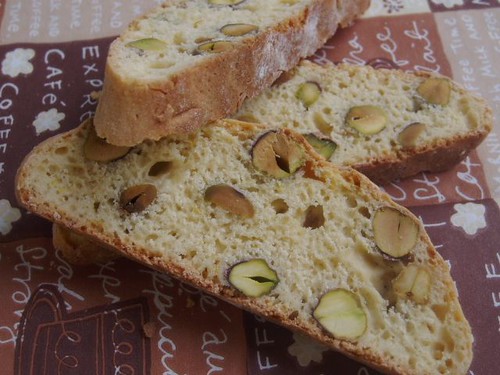
Meine Herren haben an Biscottis Gefallen gefunden. Seit kurzem führt der (L)aden auch Bio-Zitronen, ein Problem weniger, ungespritzte Zitronenschalen zu finden. Noch schnell die Pistazien nach dieser Methode enthäutet und die

Zitronen-Pistazien-Biscotti

Zitronen-Pistazien-Biscotti

gebacken. Die doppelt gebackenen Kekse schmecken zitronig-frisch und nicht zu süß. Zitrone passt gut zu Pistazie.

Abweichend vom englischen Originalrezept habe ich die Biscottis wieder aufrecht getrocknet.

========== REZKONV-Rezept – RezkonvSuite v1.02

Titel: Zitronen-Pistazien-Biscotti Lemon Pistachio Biscotti
Kategorien: Biscotti
Menge: 60 Pieces

335 Gramm Weizenmehl 405
143 Gramm Zucker
1 Pack. Vanillezucker
1 1/2 Teel. Backpulver
180 Gramm Pistazienkerne
3 Eier, Größe L
2 Zitronen, die abgeriebene Schale
3 Essl. Zitronensaft, abgeseiht

============================== QUELLE ==============================
Cookies Unlimited, October 2000
Nick Malgieri, Harper Collins
//www.epicurious.com/recipes/recipe_views/views/104366
— Erfasst *RK* 13.01.2006 von
— Ulrike Westphal

1. Den Ofen auf 175 °C vorheizen. Ein Backblech mit Backpapier
auslegen.

2. In einer SChüssel, Mehl, Zucker und Backpulver mischen. Die
Pistazien darin verteilen..

3. In einer weiteren Schüssel die Eier mit der Zitronenschale und
dem Zitronensaft vermischen. Mit einem Gummiteigheber die Eimischung
in die trockenen Zutaten einrühren. So lange weiterrühren, bis sich
ein fester Teig bildet.

4. Den Teig in zwei Hälften teilen und auf einer leicht bemehlten
Arbeitsplatte zu Rollen formen, die etwas kürzer als das Backblech
sind. Beide Teigrollen mit genügend Abstand zueinander und von den
Rändern auf das Backblech geben. Mit den Handflächen die Teigrollen
etwas flach drücken.d

5. Die Rollen für 25 bis 30 Minuten backen, oder bis sie auf die
doppelte Größe aufgegangen sind. Die Backzeit ist beendet, wenn sie
sich bei einem Fingerabdruck fest anfühlen. Das Backblech auf ein
Gitter stellen und komplett auskühlen lassen.

6. Die Backofentemperatur auf 150 °C verringern. Jede Teigrolle
diagonal in 8 mm dicke Scheiben schneiden und aufrecht auf ein mit
Backpapier ausgelegtes Backblech stellen. Die Biscotti für weitere
15 oder 20 Minuten backen, bis sie trocken und leicht goldfarben
sind. Abkühlen lassen.

7. Die abgekühlten Biscotti zwischen Backpapier in einer luftdicht
schließenden Dose aufbewahren.

=====

Nachtrag 28.11.2006: Die Eier sind jetzt auch bei den Zutaten ;-)

LEMON PISTACHIO BISCOTTI

LEMON PISTACHIO BISCOTTI

LEMON PISTACHIO BISCOTTI

-==== REZKONV-Recipe – RezkonvSuite v1.02

Title: LEMON PISTACHIO BISCOTTI Zitronen-Pistazien-Biscotti
Categories: Biscotti
Yield: 60 Biscotti

2 1/4 cups All-purpose flour
3/4 cup Sugar
1 1/2 teasp. Baking powder
180 grams (about 1 1/2 cups) unsalted pistachios
3 large Eggs
Finely grated zest of 2 medium lemons
3 tablesp. Strained lemon juice
1 teasp. Vanilla extract
2 Cookie sheets or jelly roll pans covered with
— parchment or foil

============================== SOURCE ==============================
Cookies Unlimited, October 2000
Nick Malgieri, HarperCollins
//www.epicurious.com/recipes/recipe_views/views/104366
— Edited *RK* 01/13/2006 by
— Ulrike Westphal

1. Set a rack in the middle of the oven and preheat to 350°.

2. In a medium bowl, combine the flour, sugar, and baking powder;
stir well to mix. Stir in the pistachios.

3. In another bowl, whisk the eggs with the lemon zest, juice, and
vanilla. Use a rubber spatula to stir the egg mixture intot he dry
ingredients. Continue to stir until a stiff dough forms.

4. Scrape the dough onto a lightly floured work surface and divide
it in half. Roll each half under th epalms of your hands into a
cylinder a little shorter than your baking sheet. Place the logs of
dough on the baking sheet, making sure they are not too close to
each other or to the sides of the pan. With the palm of your hand,
press down gently to flatten the logs.

5. Bake for about 25 to 30 minutes, or until the logs are well risen
and have spread to about double their size. The logs are done when,
pressed with a fingertip, they feel firm. Place the pan on a rack to
cool the logs completely.

6. Reset the racks in the upper and lower thirds of the oven. Reduce
the oven temperature to 300°F. Place each of the cooled logs on a
cutting board and cut it into 1/3-inch thick diagonal slices.
Arrange the biscotti on the prepared pans, cut side down. It isn’t
necessary to leave space between them. Bake the biscotti for about
15 or 20 minutes or until they are dry and lightly golden. Cool on
the pan on a rack.

7. Store the cooled biscotti between sheets of parchment or wax
paper in a tin or plastic container with a tight-fitting cover.

=====

more recipes and entries in English

Asiatisch für Anfänger: Pick & mix noodle plate

Im Kontor Kiel 07.02.2024 ** habe ich Esstäbchen für Anfänger gefunden. Da musste der Gemüsemuffel heute Mittag

Asiatisch für Anfänger

Asiatisch für Anfänger

essen, nämlich die Pick & mix noodle plate.

Die in dem englischen Rezept genannte Fleischmenge ist unserer Ansicht zu gering bemessen. 400 g Fleisch können es für 4 Personen gut und gerne sein. Mir hat die fettarme Zubereitung der panierten Hähnchenstreifen sehr gut gefallen. Echt lecker!

Der Gemüsemuffel hat sein Gemüse auch wirklich gegessen.

** 07.07.2024 https://kiel.city-map.de/01010000/geschenkartikel nur noch im Webarchiv verfügbar