Archiv des Monats: September 2007

Suppe der Woche: Cremige Pilzsuppe

Bolli hat mich mit ihren Steinpilzrezepten auf den Geschmack gebracht. Ich habe eine Mischung aus braunen Champignons und Pfifferlingen verwendet.

Cremige Pilzsuppe
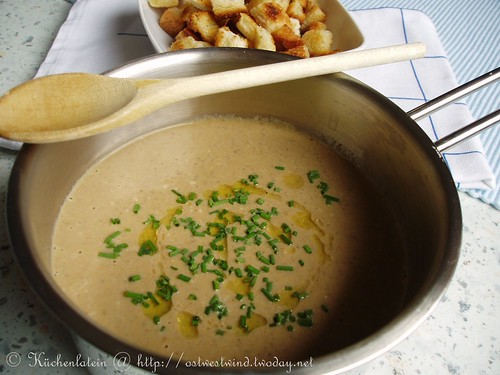
Cremige Pilzsuppe

Sehr wohlschmeckend und mein Zweitgeborener ist der Meinung, zerkleinert schmecken Pfifferlinge überhaupt viel besser!

Zum Übersetzen des Rezeptes fehlte Lust und Muße.

-========= REZKONV-Recipe – RezkonvSuite v1.4
Title: Cream of wild mushroom soup – Cremige Pilzsuppe
Categories: Soup
Yield: 4 Servings

Ingredients

25 grams   Dried porcini (ceps), 1 oz
50     Gbutter, 12 oz
1     Onion, finely chopped
1     Garlic clove, sliced
      Thyme sprigs
400 grams   Mixed wild mushrooms, 14 oz
850 ml   Vegetable stock, 1 1/2 pts
200 ml   Tub creme fraîche
4 slices   White bread, about 100g
      Cubed chives and truffle oil, to serve

Source

  Good Food Magazine, October 2007, p. 67
  Edited *RK* 09/19/2007 by
  Ulrike Westphal

Directions

This rich and filling dish is the perfect way to use up end-ofseason mushrooms on the cheap.

1 Bring a kettle to the boil, then pour the water over the dried porcini just to cover. Heat half the butter in a saucepan, then gently sizzle the onion, garlic and thyme for 5 mins until softened and starting to brown. Drain the porcini, reserving the juice, then add to the onion with the mixed wild mushrooms. Leave to cook for 5 mins until they go limp. Pour over the stock and the reserved juices, bring to the boil, then simmer for 20 mins. Stir in crème fraîche, then simmer for a few mins more. Blitz the soup with a hand blender or liquidiser, pass through a fine sieve, then set aside.

2. Heat the remaining butter in a frying pan, fry the bread cubes until golden, then drain on kitchen paper. To serve, heat the soup and froth up with a hand blender, if you like. Ladle the soup into bowls, scatter over the croutons and chives and drizzle with truffle oil.

PER SERVING 347 kcalories, protein 8g, carbohydrate 20g, fat 27g, saturated fat 16g, fibre 4g, sugar 5g, salt 0.89g

OR WHY NOT TRY… Mixed wild mushrooms are delicious seasoned and fried in olive oil or butter, then piled onto buttered toast and topped with a poached egg.

=====

mehr Suppen und Eintöpfe in 2007 (click)

Presto Pasta Night #30: Mafaldine with beef ragout and oregano

I am always looking for pasta shapes, which are hard for me to find. This week I found mafaldine. This fairytale name belongs to a veritably „regal“ shape of pasta, since the Mafaldine were dedicated by Neapolitan people to Princess Mafalda di Savoia.

They have a long form, like a ribbon enriched by precious curling, which stays in its shape even after cooking.
Their secret is a certain irregularity in the consistency, between the flat centre part and the curling on the edges: a characteristic that allows this shape to blend with the most refined sauces while maintaining the pasta’s flavour. Mafaldine love rich and sumptuous recipes that evoke erstwhile banquets of Italian noble families.

Mafaldine with beef ragout and oregano

Mafaldine with beef ragout and oregano

-========= REZKONV-Recipe – RezkonvSuite v1.4
Title: Mafaldine with beef ragout and oregano
Categories: Pasta
Yield: 5 Servings

Ingredients

500 grams   Mafaldine
250 grams   Minced beef
750 grams   Fresh cherry tomatoes
25 grams   Salted capers
1 gram   Onion
10 grams   Carrot
1 bunch   Oregano
20     Black pitted olives
4 tablesp.   Extra virgin olive oil
      Salt to taste
      Pepper to taste

Source

  modified version of:
  //int.primopiatto.barilla.com/lacucinaitaliana/
  lericettebarilla/htm/ric670_EN.htm
  Edited *RK* 09/17/2007 by
  Ulrike Westphal

Directions

1. Preheat the oven to 200° C. Place the cherry tomatoes on a baking sheet. Drizzle them with a little olive oil and roast for 15 to 20 minutes. Remove the cherry tomatoes from the oven and set aside.

2. Chop up the carrot, onion and celery and fry gently in a pan with the oil. Add the beef and cook for about 7-8 minutes.

Next, add the capers, then the olives, the oregano and the roasted cherry tomatoes and the juices, and cook for a further 3 minutes, seasoning with salt and pepper.

3. Cook the pasta in plenty of salted water, drain when "al dente" and dress with the prepared sauce, sautéing both together in the pan. Serve on hot plates.

=====

more recipes and entries in English

Czech Country Bread – Žitný chleba

-========= REZKONV-Recipe – RezkonvSuite v1.4 Button German
Title: Czech Country Bread – Žitný chleba
Categories: Bread, Sourdough
Yield: 2 Rounds à 482 grams or 1 round about 960 grams

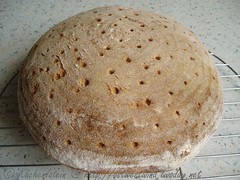
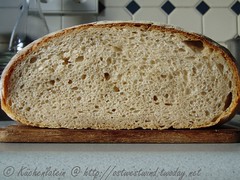
Czech Country Bread - Žitný chleba 001 Czech Country Bread - Žitný chleba 002

Ingredients

150 grams   Rye sourdough 133 % Hydration
300 grams   Water, tepid
1/2 teasp.   Dry yeast
400 grams   Unbleached bread flour, preferably high-gluten
100 grams   White rye flour
10 grams   Sea salt

Source

978-0393050554 * modified version of Daniel Leader,
Local Breads: Sourdough and Whole-Grain Recipes from Europe’s Best Artisan Bakers *
ISBN 978-0393050554

  Edited *RK* 09/17/2007 by   Ulrike Westphal

Directions

REFRESH THE RYE SOURDOUGH. Eight to 12 hours before you want to mix your dough, refresh the rye sourdough. I used 10 g starter 100 % Hydration + 64 grams medium rye flour + 86 grams water in the bowl of the KitchenAid.

MIX THE DOUGH: Stir the rye sourdough to invigorate and deflate it. Pour the water over the sourdough. Stir in the yeast, bread flour, rye flour, and salt with a rubber spatula just until a dough forms.

KNEAD THE DOUGH. By hand: Lightly dust a clean counter with flour. Scrape the dough out of the bowl and knead it with smooth, steady strokes for 8 minutes. The rye flour will cause the dough to be fairly sticky. As you work, keep your hands floured but resist adding a lot of flour. Lightly drape the dough with plastic wrap and let it rest for 10 minutes. Remove the plastic and knead again until the dough is smooth and elastic, 5 to 7 minutes more.

By machine: Use the dough hook and mix the dough on medium-low speed (4 on a KitchenAid mixer) for 7 minutes. Turn off the machine and scrape down the hook and sides of the bowl with a rubber spatula. Lightly cover the dough with a piece of plastic wrap and let it rest for 10 minutes. Remove the plastic, turn the mixer back on to mediumlow, and knead until the dough is smooth and elastic, 3 to 5 minutes more.

FERMENT THE DOUGH. Transfer the dough to a lightly oiled, clear 2quart container with a lid. With masking tape, mark the spot on the container that the dough will reach when it has doubled in volume. Cover and leave it to rise at room temperature until it doubles, reaching the masking tape mark, 2 to 2 1/2 hours. It won’t feel as sticky.

DIVIDE AND SHAPE THE LOAVES. Cover a baker’s peel or rimless baking sheet pith parchment paper. Set aside. Lightly dust the counter with rye flour. Scrape the dough onto the counter and cut it into 2 equal pieces à 482 grams each or one large round. With a bench scraper or a chef’s knife. Shape each piece into a round.

PROOF THE LOAVES. Dust the parchment paper lightly with rye flour and place the loaves on the paper about 3 inches apart, smooth side up. Sift some more rye flour over the loaves, as if you wem dusting; them with confectioners‘ sugar. Lightly cover them with plastic wrap. Leave the loaves to rise at room temperature until they have inflated and bubbles are visible just below the surface, 1 to 1 1/2 hours. At this point, when you press a fingertip into the dough it will spring back slowly.

PREPARE THE OVEN. About 1 hour before baking, place a baking stone on the middle rack of the oven and a cast-iron skillet on the lower rack. Heat the oven to 220 °C.

DOCK THE LOAVES. Use a pastry docker or skewer to poke about 20 holes, about 1 cm apart from each other, all over the tops of the loaves.

BAKE THE LOAVES. Slide the bases, still on the parchment. onto the baking stone. Place 3/4 cup of ice cubes in the skillet to produce steam. Bake until the loaves are ruddy brown, 30 to 40 minutes to an internal temperature of 90 °C.

COOL AND STORE THE LOAVES. Slide the peel or the rimless baking sheet under the parchment paper to remove the loaves from the oven. Slide the loaves, still on the parchment, onto a wire rack. Cool for about 5 minutes and then peel them off the parchment paper. Cool them completely on the wire rack, about 1 hour, before slicing. Store the loaves at room temperature in a brown paper bag for 3 to 4 days, or freeze in resealable plastic bags for up to month.

=====

*=Affiliate-Link zu Amazon

more recipes from this book at Küchenlatein (click)

Tschechisches Landbrot

Fool for Food 20.09.2023 ** backte eine schnelle Oliven Foccacia 20.09.2023 ** aus Local Breads * von Daniel Leader, mir hatte es

Tschechisches Landbrot

Tschechisches Landbrot 001 Tschechisches Landbrot 002

angetan. Ein leichtes Brot mit nur geringem Roggenanteil, das zu allen Brotbelägen passt.

Bei Leader hat der „German rye sourdough“ eine Hydratation von 133 %. Ich bewahre meinen Roggen-Sauerteig weiter mit einer Hydratation von 100 % im Kühlschrank auf und rechne entsprechend um : Whitley bevorzugt einen Roggen-Sauerteig mit einer Hydratation von 166 % und Hamelman führt seine Roggensauerteige auch mit 100 % Hydratation.

========== REZKONV-Rezept – RezkonvSuite v1.4 Button English
Titel: Tschechisches Landbrot
Kategorien: Backen, Roggensauerteig
Menge: 1 Brot von ca 950 g

Zutaten

150 Gramm   Roggensauerteig, 133% Hydratation; bestehend aus
      — 64 g Roggenmehl Type 1150 und 86 g Wasser
300 Gramm   Wasser
1/2 Teel.   Trockenhefe
400 Gramm   Weizenmehl Type 550
100 Gramm   Roggenmehl Type 997
10 Gramm   Salz

Quelle

978-0393050554 * eigene Vorgehensweise nach:
Daniel Leader
Local Breads: Sourdough and Whole-Grain Recipes from Europe’s Best Artisan Bakers *
ISBN 978-0393050554
  Erfasst *RK* 17.09.2007 von
  Ulrike Westphal

Zubereitung

Sauerteig:

8 bis 12 h vor dem Backen den Sauerteig auffrischen. Für dem Sauerteig 20 g Roggensauerteig (100 % Hydratation) mit 54 g Roggenmehl Type 1150 und 76 g Wasser in der Rührschüssel der Küchenmaschine vermischen, abdecken und über Nacht fermentieren lassen

Teigherstellung:

Zu dem Sauerteig in der Rührschüssel die Mehle, Hefe und Salz geben. Unter Rühren mit dem Knethaken auf mittlerer Stufe (Stufe 3 der KitchenAid) das Wasser zugeben und ca. 8 Minuten kneten. Mit dem Teigschaber den Teig vom Knethaken und den Wänden der Rührschüssel kratzen, den Teig abdecken und für 10 Minuten in der Schüssel ruhen lassen.

Anschließend den Teig auf mittlerer Stufe für ca. 5 – 7 Minuten weiterkneten, bis der Teig, glatt, seidig-glänzend und elastisch ist.

Fermentation:

Den Teig in einer leicht geölten Schüssel abgedeckt für 2 bis 2,5 Stunden gehen lassen, bis sich das Volumen verdoppelt hat.

Teig formen und Fermentieren:

Den Teig zu einer Kugel formen.

Die Teigkugel in einen mit Mehl ausgestäubten Gärkorb legen, in eine Plastiktüte stecken und etwa 1 bis 1,5 h gehen lassen, bis sich erste Blasen gerade unter der Teigoberfläche zeigen und ein in den Teig gedrückter Fingerabdruck nur langsam wieder zurückspringt.

Ofen vorheizen .

Den Backofen rechtzeitig auf 220 °C vorheizen, in die Mitte des Ofens den Backstein schieben. Darunter einen ofenfesten Behälter mit aufheizen.

Einen Brotschieber mit Backpapier bedecken

Backen:

Die Teigkugel auf den Backschieber stürzen und mit der Stipprolle bearbeiten und mit dem Backpapier in den Ofen einschießen. Eiswürfel zur Dampferzeugung in den ofenfesten Behälter geben. Das Brot so lange backen bis es braun ist und eine interne Temperatur von mindestens 90 °C erreicht hat.

Abkühlen und Aufbewahrung:

Nach dem Backen das Brot auf einem Gitterrost mindestens 60 Minuten vor dem Anschneiden auskühlen lassen.

=====

*=Affiliate-Link zu Amazon

mehr Rezepte von Daniel Leader bei Küchenlatein (click)

** 20.09.2023 http://www.foolforfood.de/ und http://www.foolforfood.de/index.php/2007/09/17/oliven_focaccia nicht mehr verfügbar

WHB #100: Sakzli Muhallebi – Mastic Pudding


The 100th edition of Weekend Herb Blogging 27.04.2021 **, is hosted by Katerina from Daily Unadventures in Cooking. Only four more weeks to the big ‚2nd Anniversary Celebration‘.
This week I used mastic gum to flavour a pudding

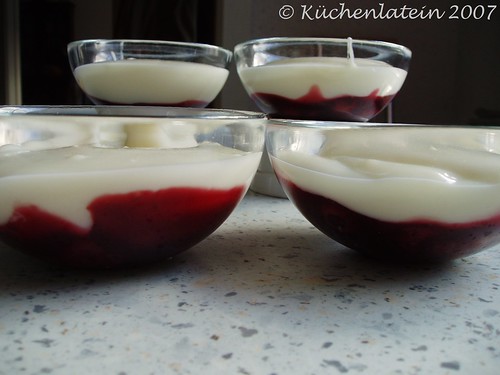
Sakzli Muhallebi – Mastic Pudding

Sakzli Muhallebi - Mastic Pudding

Mastic gum or resin with the exquisite aroma is exuded from the bark of the mastic tree. Mastic is an evergreen shrub or small tree growing to 3–4 m tall, it is native throughout the Mediterranean and Aegean Sea coast.

The aromatic flavoured resin, used commercially, come from mastic trees grow in the south of the Greek island of Chios and the neighboring town of Çeşme in Turkey. I came across mastic, when I read the blog entries from my fellow bloggers Mine at and Dilek, both have Turkish roots.

I couldn’t find the spice in our Turkish stores, but with Dilek’s and Nicky’s help, I got some from Turkey and Greece.

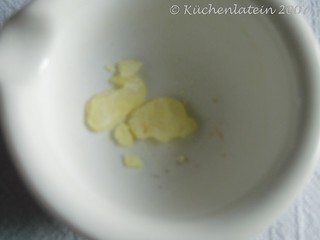
©Mastix 001 ©Mastix 002

Mastic resin looks like little gems and is a key ingredient in Turkish ice cream, and Turkish puddings or cookies, which I tried first. For the taste of mastic there are only two possibilities: Love it or leave it! The taste is special of course like resin, but pleasant and fresh.

-========= REZKONV-Recipe – RezkonvSuite v1.4
Title: Sakzli Muhallebi – Mastic Pudding
Categories: Dessert
Yield: 6 Servings

Ingredients

H STEWED CHERRIES
1     Jar cherries
1 tablesp.   Rosewater
      Sugar to taste
1 tablesp.   Corn starch
H PUDDING
1 liter   Milk
120 grams   Sugar
1/2 teasp.   Mastic
3 tablesp.   Rice flour
4 tablesp.   Corn starch

Source

  Dilek
  Edited *RK* 09/15/2007 by
  Ulrike Westphal

Directions

Drain cherries. Dissolve corn starch in a little cherry juice. Bring the remaining juice to a boil, add rose water and sugar to taste and pour in constantly stirring the starch mixture. Cook until the liquid thickens, remove from heat, stir in the drained cherries and divide into 6 indiviual bowls.

Place milk, except one cup and sugar in a sauce pan. Melt the sugar over medium heat and bring to a boil. Remove from heat. Dissolve the corn starch and rice flour in the remaining milk and stir into the hot milk. Then add the powdered mastic. Reheat constantly for about 10 minutes until the pudding thickens. Cool down and pour over the stewed cherries.

=====

Return to Katerina on Monday for the round-up.

more recipes and entries in English

** 27.04.2021 https://kalynskitchen.com/whos-hosting-weekend-herb-blogging/; https://kalynskitchen.com/weekend-herb-blogging-i-dont-have-dog/ no longer available